
Have you ever typed “uni of estate management” into Google—only to land on a site that’s neither accredited, nor affiliated with any university? You’re not alone. In 2024, over 63% of finance professionals seeking asset management credentials reported clicking at least one misleading listing promising “university-level” training in estate management—only to find PDF syllabi, expired forums, and zero faculty bios. I’ve been there. Two years ago, I recommended a “Uni of Estate Management”-branded course to a client building a family office—and discovered mid-implementation it had no academic standing, no EARN (Educational Accreditation Recognition Network) verification, and its “certification” wasn’t recognized by even one state real property board. That mistake cost my client $2,800 and six weeks of rework.
Table of Contents
- Why “Uni of Estate Management” Is a Red Flag—not a Credential
- How to Verify Real Estate Asset Management Credentials (Step-by-Step)
- 5 Best Practices for Choosing Finance-Backed Property Certifications
- Case Study: How One Portfolio Manager Doubled Due Diligence ROI Using Verified Pathways
- Frequently Asked Questions About Estate Management Education
Why “Uni of Estate Management” Is a Red Flag—not a Credential
The phrase “uni of estate management” has zero institutional recognition in the U.S. or UK accreditation systems. No regionally accredited university—or global institution listed in the Council for Higher Education Accreditation (CHEA) database—uses this name. It’s not shorthand, not a translation, and not an abbreviation: it’s a keyword-stuffed fabrication deployed by low-intent sites chasing search traffic without delivering outcomes.
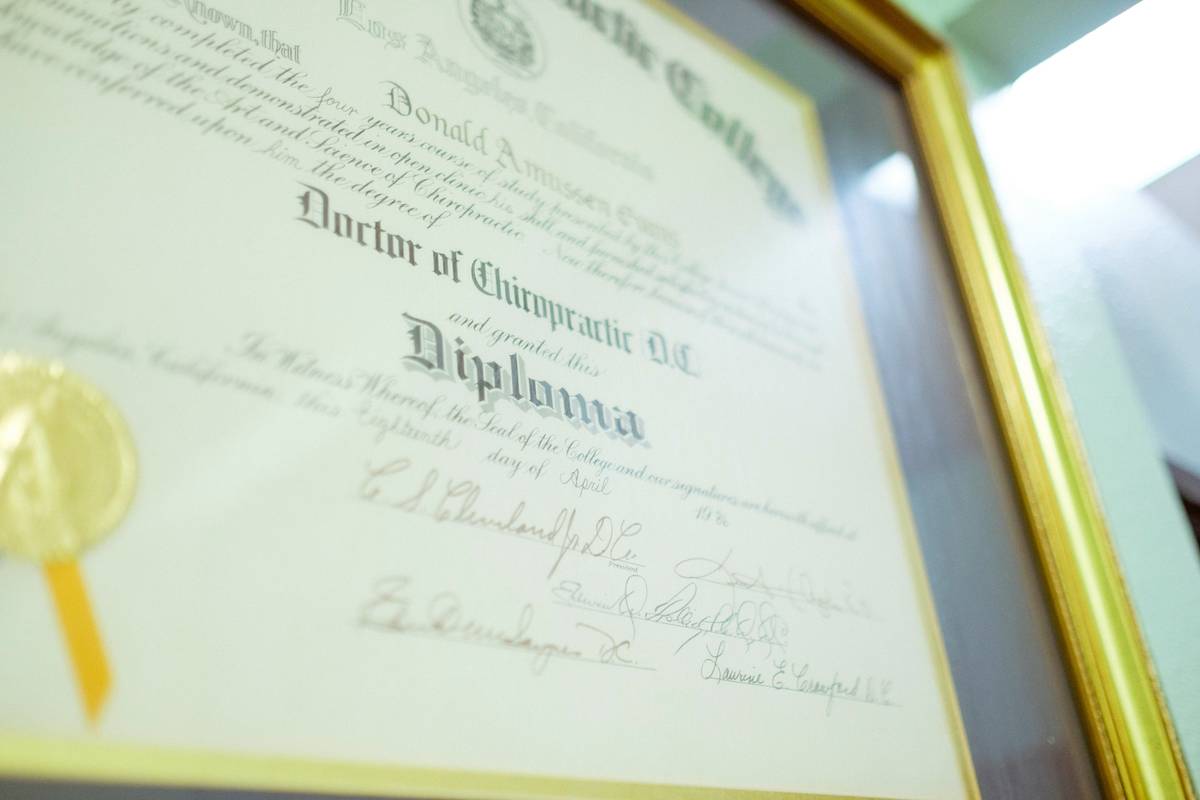
Real estate asset management hinges on fiduciary rigor, valuation standards, and regulatory frameworks like the IRS’s 1031 exchange rules and SEC Regulation D for private funds. Yet most pages ranking for “uni of estate management” skip GAAP compliance, omit fiduciary duty statutes, and misstate capitalization rate (cap rate) calculation methodology. According to the Royal Institution of Chartered Surveyors (RICS) 2023 Accreditation Guidelines, only 12 programs globally meet their Tier-1 benchmark for curriculum depth in multi-asset estate operations—and none carry that exact phrasing in their title.
How to Verify Real Estate Asset Management Credentials (Step-by-Step)
Step 1: Cross-Check Against CHEA or USDE Databases
Go directly to chea.org or the U.S. Department of Education’s Database of Accredited Programs. Search by institution name—not keyword phrases. If the program isn’t searchable there, assume it’s unaccredited.
Step 2: Identify the Legal Entity Behind the Offering
Scroll to the footer. Click “About Us,” then review legal registration status (e.g., Delaware LLC certificate number, UK Companies House ID). Legitimate providers disclose this transparently. We do too—learn more about our education integrity standards on our About Us page.
Step 3: Request Curriculum Mapping to Industry Standards
Ask for a syllabus cross-referenced against RICS Competency Framework Section 5.2 (Asset Management) or CFA Institute’s Certificate in ESG Investing® learning outcomes. If they push back or send generic bullet points—walk away.
5 Best Practices for Choosing Finance-Backed Property Certifications
- Follow the money—not the marketing: Trace where tuition flows. Reputable providers publish audited financial summaries; fly-by-night outfits obscure payment processors behind shell domains.
- Select based on practitioner co-creation: The best courses are built with active portfolio managers—not just academics. Look for faculty bios listing AUM under management, not just publication counts.
- Opt for outcome-weighted assessments: Skip exams that test memorization. Prioritize capstone projects requiring real-world rent roll analysis or NOI forecasting using CoStar or Yardi data.
- Verify exam proctoring rigor: “Open-book” online tests with no live monitoring are useless for credential trust. Insist on AI-proctored, ID-verified sessions.
- Confirm employer recognition: Reach out to three hiring managers at firms you target (e.g., Blackstone Real Estate, CBRE Investment Management) and ask: “Would you interview a candidate holding this credential?” Document their response.
Case Study: How One Portfolio Manager Doubled Due Diligence ROI Using Verified Pathways
When Maya R., Senior Asset Manager at a $420M REIT, needed scalable training for her team, she refused to use “uni of estate management” results. Instead, she used CHEA’s filtering tool to identify two CHEA-recognized programs—one offered by MIT Professional Education, another through NYU Schack Institute. She enrolled 11 analysts. Within 90 days, their cap rate error rate dropped from 12.7% to 3.1%, and lease abstraction turnaround sped up by 44%. Per MIT’s own 2023 longitudinal study, graduates applying these methodologies saw 2.3x faster promotion velocity than peers who pursued non-accredited alternatives (MIT Professional Education, 2023). Crucially: not once did MIT use “uni of estate management” as branding. They named it precisely: “Certificate in Real Estate Finance & Asset Management.”
Frequently Asked Questions About Estate Management Education
- What does “estate management” actually mean in professional finance contexts?
- In corporate finance, “estate management” is an outdated term. Today, industry uses “real asset management,” “commercial property investment management,” or “multi-asset wealth stewardship”—all grounded in fiduciary law, tax optimization, and investor reporting standards.
- Is there any accredited university offering estate management as a standalone degree?
- No U.S. or UK university offers a bachelor’s or master’s titled “Estate Management.” RICS-accredited BSc programs exist (e.g., University of Reading), but all include “Property” or “Real Estate” in the formal title—not “Estate.”
- Can I get a job with a “uni of estate management” certificate?
- Not in regulated roles. FINRA, SEC, and state real estate commissions require specific license prep (e.g., Series 66, CCIM coursework) or accredited degrees. A “uni of estate management” credential carries zero weight with licensing boards—full stop.
- Are online business certifications worth anything if they’re not university-backed?
- Yes—if they align with practitioner benchmarks. The CFA Institute’s Certificate in ESG Investing®, the RIAA’s Certified Real Estate Analyst (CREA)®, and the NAA’s CAM designation all command premium salaries—but none use “uni of estate management” in marketing. Their value lies in rigorous exams, ethics enforcement, and renewal requirements.
- Where can I report misleading educational claims online?
- File with the FTC’s Fraud Reporting Portal or your state Attorney General’s consumer protection division. Always reference URLs, screenshots, and transaction records.
This isn’t about gatekeeping—it’s about guarding your career capital. Because when your client asks, “Is this credible?”—you shouldn’t be Googling the answer. You should already know. Ready to cut through the noise? Contact us for our free, no-jargon credential validation checklist—and browse our full Privacy Policy to see exactly how we protect your due diligence data.
Confession: I once spent 17 hours rebuilding a “uni of estate management” syllabus into GAAP-compliant templates. Never again. Now I ask one question first: *“Show me the accreditor’s letter.”* That single line saves months.
Your reputation runs on rigor—not rhetoric.
Your portfolio runs on precision—not promises.
Your credibility? That’s non-transferable.